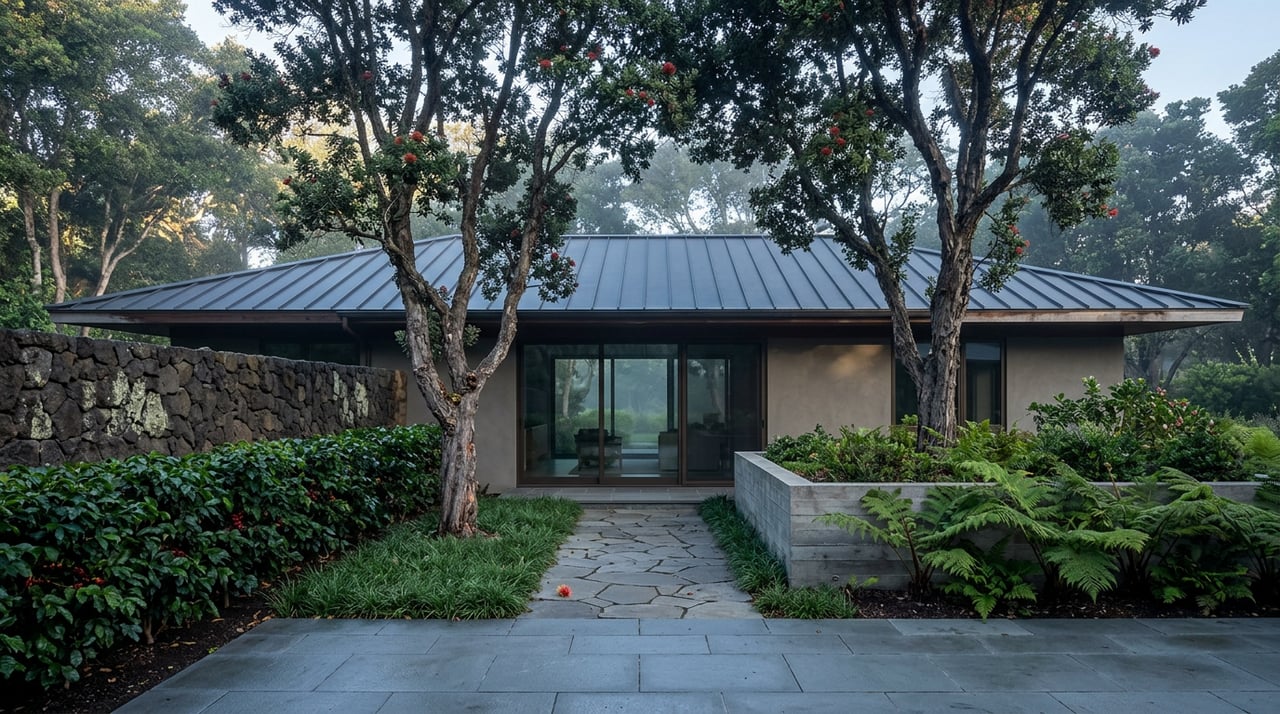
A peacock does not care about property lines. Neither does a wild turkey, and neither, for that matter, does a lava tube that was here a thousand years before anyone platted a subdivision. If you live in Makalei, you already know this. What you may not have connected is that the same elevation line that lets a peacock wander from the golf course into your driveway is the reason your neighbor two lots down has a coffee farm instead of a lawn.
Most Kona neighborhoods get described by their view of the water. Makalei is one of the few where the interesting story is what happens because you can barely see the water at all, most mornings, until the cloud layer burns off.
The line at 1,800 feet
Makalei Estates, the residential subdivision off Highway 190 in the Kalaoa district, sits roughly between 1,000 and 1,800 feet of elevation. The golf course it's named for climbs higher still, from about 1,800 feet at its lower holes to 2,850 feet near the top of the routing. That thousand-foot spread inside one community means the fairway you can see from your lanai is running ten to fifteen degrees cooler than the tee box you started on.
That gradient is not decorative. It is the entire reason Makalei Golf Club, designed by Dick Nugent & Associates and open since 1992, can grow bentgrass greens at all. Bentgrass needs cool nights to survive, which is why almost no course in Hawaii uses it. Makalei can, because it sits in a band most of the island doesn't reach.
A golf course that turned into a sanctuary by accident
Nobody built Makalei to be a wildlife refuge. But once you put cool-season turf, mature forest, lava tubes, cinder cones, and a stone wall that predates the course by more than a century into one 18-hole footprint on the slopes of Hualalai, the animals that need exactly that combination of shade, water, and elevation showed up on their own and stayed.
Regulars and reviewers of the course routinely report the same short list of residents:
- Wild peacocks, loud and unbothered by golf carts
- Pheasants working the rough between fairways
- Wild turkeys crossing cart paths in small groups
- Nene, Hawaii's state goose, occasionally seen on the property
None of that is stocked or managed. It is what happens when a golf course sits inside the one elevation band on this side of the island where all of those species can find what they need without competing with development below them.
Farming on the slope
Cacao, like coffee, is finicky about water and shade.
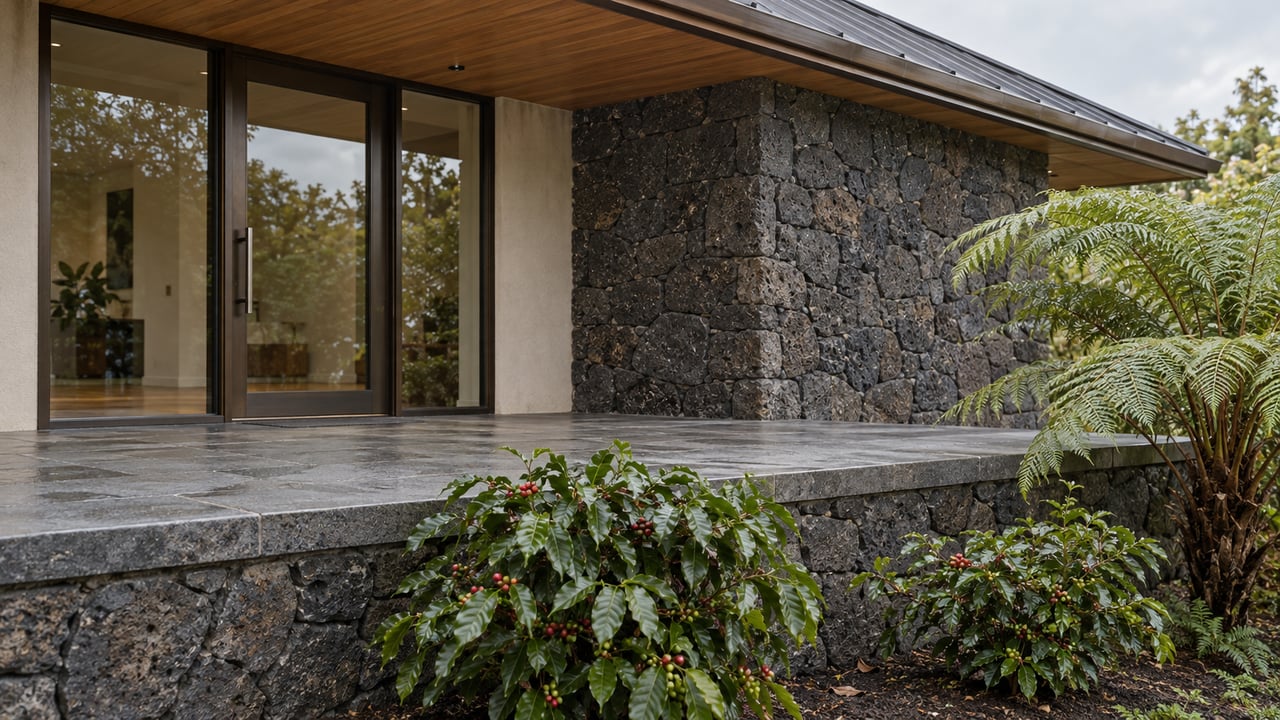
Nearby, Kaloko Coffee runs a small family operation growing 100% Kona coffee on the western flank of Hualalai, at what the farm itself describes as the elevation and soil combination that produces true Kona-quality beans. Coffee farms at similar elevation bands elsewhere on the mountain follow a predictable pattern during harvest season, which runs from August through January across the Kona belt. Mountain Thunder, at roughly 3,200 feet above Holualoa, gets afternoon cloud cover that both protects the trees and pushes its harvest window later into January than farms lower on the slope. Makalei sits below that elevation, but inside the same general mechanism: the clouds that roll in over the upper fairways most afternoons are doing agricultural work, not just changing the light for photos.
That is the part that applies to Makalei, not a coastal Kona property. At sea level you get sun and salt air. At 1,800 to 2,850 feet you get the specific combination of morning clarity and afternoon cloud that turns a residential golf community into unlabeled coffee country.
What actually changes on a Tuesday afternoon
Live at this elevation long enough and the calendar starts running on its own logic. The golf course itself keeps a schedule built around the cooler air: it opens at 6 a.m. daily and closes at 5:30 p.m., but the driving range shuts down early on Wednesdays at 2 p.m. and doesn't reopen until 9 the next morning, a maintenance window built around growing conditions that a coastal range would never need. The on-course Peacock Grille runs a tight lunch window, 10 a.m. to 3 p.m., with a beverage cart starting service at 9, which tells you when the course actually fills with players versus when it's quiet enough for the wildlife to have the fairways to themselves.
None of this is something you'd notice from a listing photo. It shows up as the ten-degree difference between your car's thermometer at the bottom of your driveway and at the clubhouse, as the sound of a peacock at an hour no coastal Kona neighborhood would have one, and as the sight of coffee cherries ripening in a yard that has nothing to do with tourism.
Makalei gets marketed on golf and gated privacy, and both of those things are true. But the detail that actually explains the place, the one that ties the wildlife, the bentgrass, and the working farms together, is a thousand feet of elevation that most people driving up Highway 190 never think about twice.
If you're weighing what a specific elevation, lot, or view corridor in Makalei actually delivers day to day, that's the kind of ground-level detail worth a real conversation rather than a listing sheet. Hawaii 5-0 Realty works this side of Kona directly. Call Donna or Jonathan for a Kona real estate consultation.